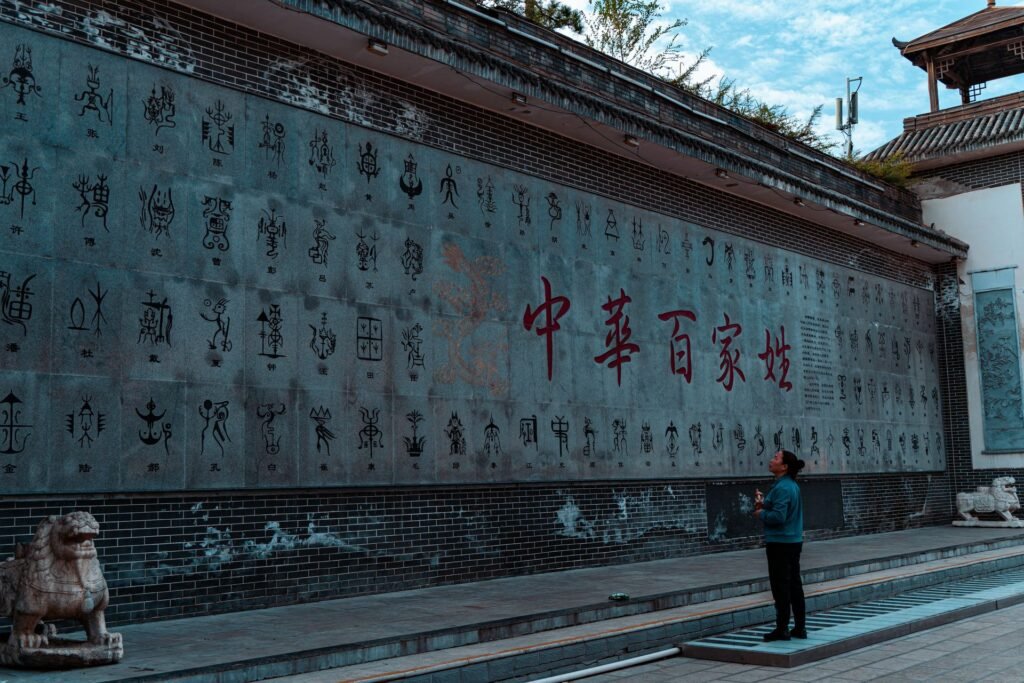
Search for “Chinese first names” and you’ll get lists of characters and meanings almost immediately. But here’s the part most lists skip: in Chinese, what English speakers call a “first name” isn’t actually first. It comes second, after the surname. That one detail changes how you read every name on this page. So let’s start there, then move on to real examples for girls, boys, and unisex use.
Key Takeaways
- In Chinese naming order, the surname comes first. The given name — what English speakers usually mean by “first name” — comes second.
- A Chinese given name is almost always one or two characters. Families choose each character for its meaning, rather than pulling it from a fixed list of names.
- Because families compose given names rather than select them from a directory, no single list can be “complete.” What follows are real, commonly used examples to start from.
- Names lean feminine, masculine, or neutral based on the characters you choose — not on any grammatical rule. Chinese has no gendered name endings.
- Families traditionally pair a given name with a real surname, and the two work together. So it’s worth thinking about both, not just the first name alone.
- Chinese Name Studio’s generator builds both halves for you. It matches a surname to your name’s sound, then chooses a given name for meaning.
What Actually Counts as a “Chinese First Name”?
The term “first name” comes from English naming order: given name first, family name last. Chinese naming order runs the other way. Chinese speakers say and write the family name (姓, xìng) first, and the given name (名, míng) follows it (Wikipedia: Chinese name). So when someone searches “Chinese first names,” they almost always mean the given name. That’s the part that comes after the surname, not before it.
This isn’t just trivia — it matters if you’re building a name yourself. A “Chinese first name” on its own is only half a name. The fuller picture adds a real surname, like 王 (Wáng) or 李 (Lǐ), plus a one- or two-character given name. You choose that given name specifically for what it means. Most full names run two or three characters in total.
How Chinese Given Names Are Actually Chosen
Chinese given names don’t come from a shortlist, the way many Western first names do. Families compose each one fresh, from ordinary words that carry real meaning — wisdom, brightness, calm, resolve (Wikipedia: Chinese given name). That’s why two people rarely share an identical full name, even with a common surname.
Three things typically guide the choice. Sound matters first: many people choosing a name for themselves pick a surname whose reading echoes their own name. Meaning matters most: pick given-name characters for what they express, not just how they look. For some families, a birth chart matters too. The traditional BaZi (八字) system reads a birth date and points to whichever of the Five Elements the name should reinforce. Curious how that works? Our guide to BaZi and how your birth chart shapes your Chinese name breaks it down without the jargon.
Real Chinese First Names, by Category
Families compose given names; they don’t pick them from a directory. So think of this table as a starting set of real, commonly used characters, not an exhaustive list. You can use each character on its own, or combine it with a second one for a longer given name.
| Category | Character (Pinyin) | Meaning | Feel |
| For girls | 婷 (Tíng) | Graceful, elegant | Soft, classic |
| For girls | 雅 (Yǎ) | Refined, elegant | Understated |
| For girls | 悦 (Yuè) | Joyful, pleased | Bright, warm |
| For girls | 婉 (Wǎn) | Gentle, tactful | Gentle |
| For boys | 浩 (Hào) | Vast, grand | Expansive |
| For boys | 轩 (Xuān) | Tall, distinguished | Confident |
| For boys | 铭 (Míng) | To inscribe, remember | Thoughtful |
| For boys | 朗 (Lǎng) | Bright, clear | Open |
| Unisex | 明 (Míng) | Bright, clear | Neutral, clean |
| Unisex | 安 (Ān) | Peace, safety | Calm |
| Unisex | 乐 (Lè) | Joy | Light |
| Unisex | 宁 (Níng) | Peaceful, tranquil | Settled |
Two of these can also combine into a two-character given name — 明悦 (Míngyuè) or 安宁 (Ānníng) both work naturally, for example. That’s a normal part of the process: you pair characters for sound and combined meaning, rather than using them strictly one at a time.
Pairing a First Name With a Surname
A given name rarely stands alone in practice. Instead, it sits next to a surname, and that pairing affects how the whole name sounds and reads. A given name that flows beautifully after one surname can feel clumsy after another. So it’s worth testing a few combinations aloud, rather than locking in a given name in isolation.
Maybe you already have a surname in mind: inherited, sound-matched, or tool-assigned. Try it against two or three given names from the table above. If you don’t have one yet, our guide on how to choose a Chinese name covers how to pick a surname that echoes your own name’s sound. It also walks through the fuller decision process beyond just the given name.
Choosing the Right One for Yourself
Start with meaning, not looks. Ask what you want the name to say about you — calm, ambition, joy, quiet strength. Let that narrow the character pool before you worry about how it looks on the page. Then check the sound: say the full name, surname and given name together, out loud. If it flows, you’re close. If it catches, try a different character or a different surname pairing.
For a faster route, Chinese Name Studio’s generator builds both halves in one pass. You provide your name and, optionally, your birth date. In return, it matches a surname to your sound and draws a given name from the qualities you pick. You’ll get Pinyin and a plain-language explanation of the meaning too.
Wrapping Up
A Chinese first name is really a given name, the second half of a two-part structure that starts with the surname. You choose it for meaning first, sound second, and — for some — a birth chart third. The examples above are a starting point, not a finish line. The right one is whichever character says what you want it to say. Pair it with a surname that sounds right next to it. Chinese Name Studio’s generator can build that full pairing for you in a few questions.
Frequently Asked Questions
What is a Chinese first name, exactly?
It’s the part of a Chinese name most people mean when they say “first name,” even though it technically comes second. Chinese speakers say the family name first. The given name — one or two characters chosen for their meaning — follows it. So a “Chinese first name” is really the given-name half of a full name. It isn’t the leading part, the way it would be in an English name like “Sarah Johnson.” This ordering matters if you’re building a name yourself. You should pair a given name with a real surname, not use it alone.
Is the “first name” in Chinese the same thing as the given name?
Yes, functionally. English speakers use “first name” for the personal name people call someone by, as opposed to their family name. Chinese speakers call that same personal name the given name (名, míng). It comes after the family name (姓, xìng), rather than before it. So when someone searches for “Chinese first names,” they’re almost always looking for given-name examples. That’s true even though Chinese word order actually puts the surname first. The terms describe the same part of a name; only the position within the full name differs.
How many characters are in a typical Chinese first name?
Most given names are one or two characters. A single character, like 明 (Míng) or 安 (Ān), gives a clean, minimal given name. Two characters, like 明悦 (Míngyuè), allow for a more layered meaning, often combining two qualities or images into one name. Pair a one-character surname with a two-character given name, and you get the classic three-character pattern seen throughout Chinese naming — for example, 王明悦 (Wáng Míngyuè). Three-character given names exist too, but they’re rare, usually appearing with compound surnames like 欧阳 (Ōuyáng).
Can you use a Chinese first name on its own, without a surname?
You can use it casually — plenty of people go by just their given name among friends or family. But on its own, it isn’t a complete, conventional Chinese name. A full name traditionally needs both parts: a real surname, plus the given name that follows it. So if you’re building a Chinese name for yourself, it’s worth choosing both halves together, rather than settling on a given name in isolation. The surname affects how the whole name sounds and reads.
Are Chinese first names gender-specific?
Not by grammar, but often by convention. Chinese has no gendered name endings the way some languages do, so nothing in the language itself marks a character as male or female. Certain characters do carry strong cultural associations, though. Softness and grace read as feminine; strength and ambition read as masculine. Plenty of characters, like 明 (bright) or 安 (peace), work for any gender. Those associations shift over time and vary by family, so a name doesn’t need to fit neatly into one category to be a good choice.
What are some examples of popular Chinese first names?
Common examples for girls include 婷 (Tíng, “graceful”), 雅 (Yǎ, “refined”), and 悦 (Yuè, “joyful”). For boys, 浩 (Hào, “vast”), 轩 (Xuān, “distinguished”), and 铭 (Míng, “to inscribe”) are popular choices. Neutral options like 明 (Míng, “bright”) and 安 (Ān, “peace”) work for any gender. These are commonly used characters, not a fixed or official list. Families compose Chinese given names fresh for each person, often by combining two characters. So the real variety extends far beyond any single list of examples.
Can I choose my own Chinese first name if I’m not a native speaker?
Yes, and plenty of people do — for language study, business, travel, or simply personal interest. The key is treating it the same way a Chinese-speaking family would. Pick a real surname. Choose given-name characters for their actual meaning, not just their look. Then check that the full name sounds natural when you say it aloud. There’s more nuance here than a single list can capture, so a generator or a native speaker’s input helps. Either one can confirm the result reads the way you intend, especially before you use it anywhere formal.
How is a Chinese first name different from a Western first name?
The biggest difference is position: a Western first name comes before the family name, while its Chinese equivalent, the given name, comes after it. The second difference is how people choose each one. Western first names usually come from an existing pool of established names, like Emma or James. Chinese given names, on the other hand, come from ordinary meaningful words, often combining two characters into one. That makes them function more like a small, deliberate phrase than a name pulled from a list. Both serve the same social role — the name people call someone by, personally. Cultures just build and place them differently.